A City Remembers Itself
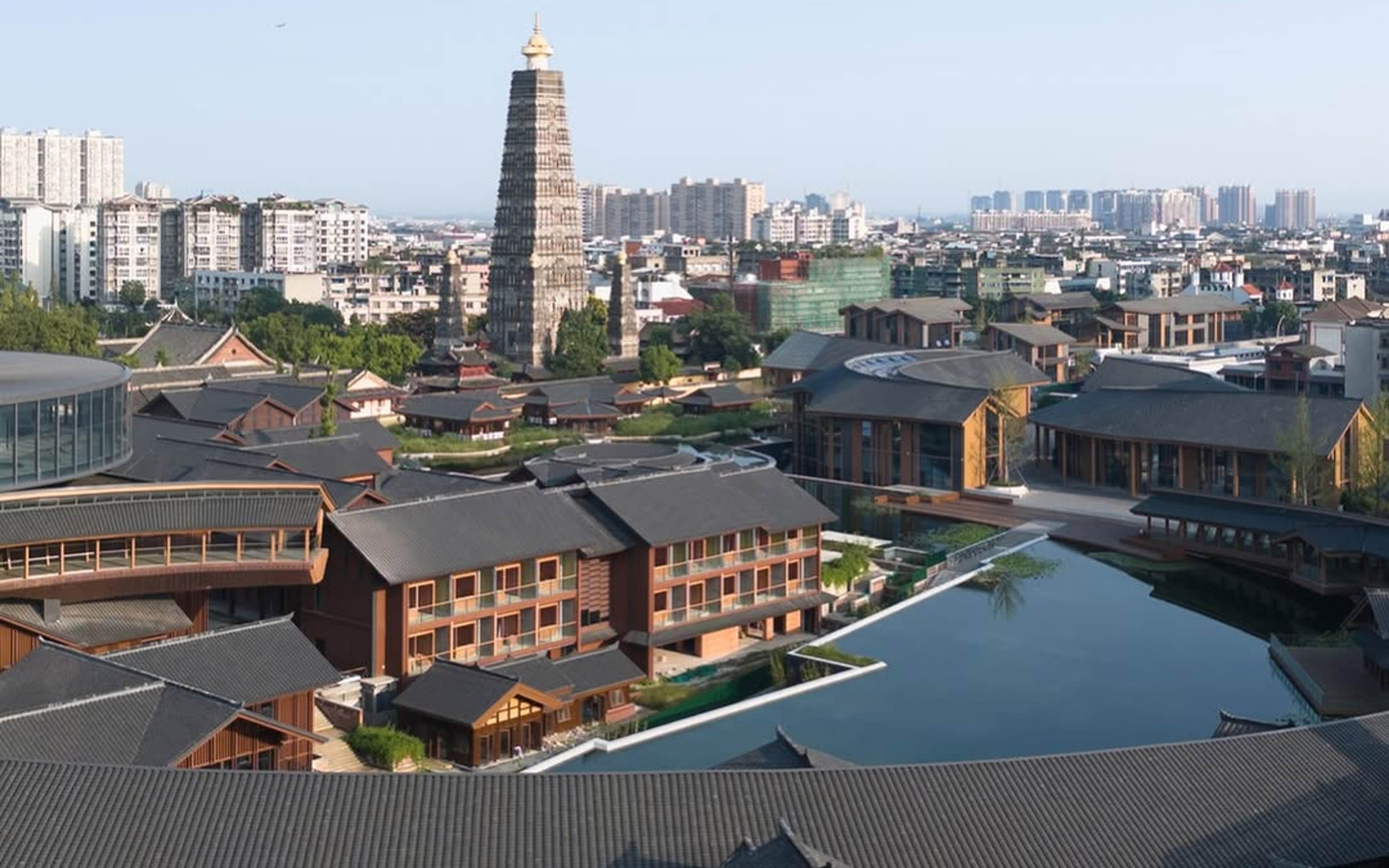
There is a particular kind of grief that comes with watching a city forget what it was. In Pengzhou, a mid-sized city in Sichuan province, decades of industrial expansion and piecemeal redevelopment had eroded the historic core until very little of it remained legible. The millennium-old Longxing Temple pagoda still stood — slender, gold-tipped, stubbornly vertical above the roofline — but the urban fabric around it had collapsed into vacancy lots and deteriorated blocks that bore no relationship to the sacred site at their center.
The Longxing Temple Area Renewal project, designed by BIAD-ASA Studio, began with a different question: not how to build something new, but how to make a city remember itself.
The Roof as Urban Language
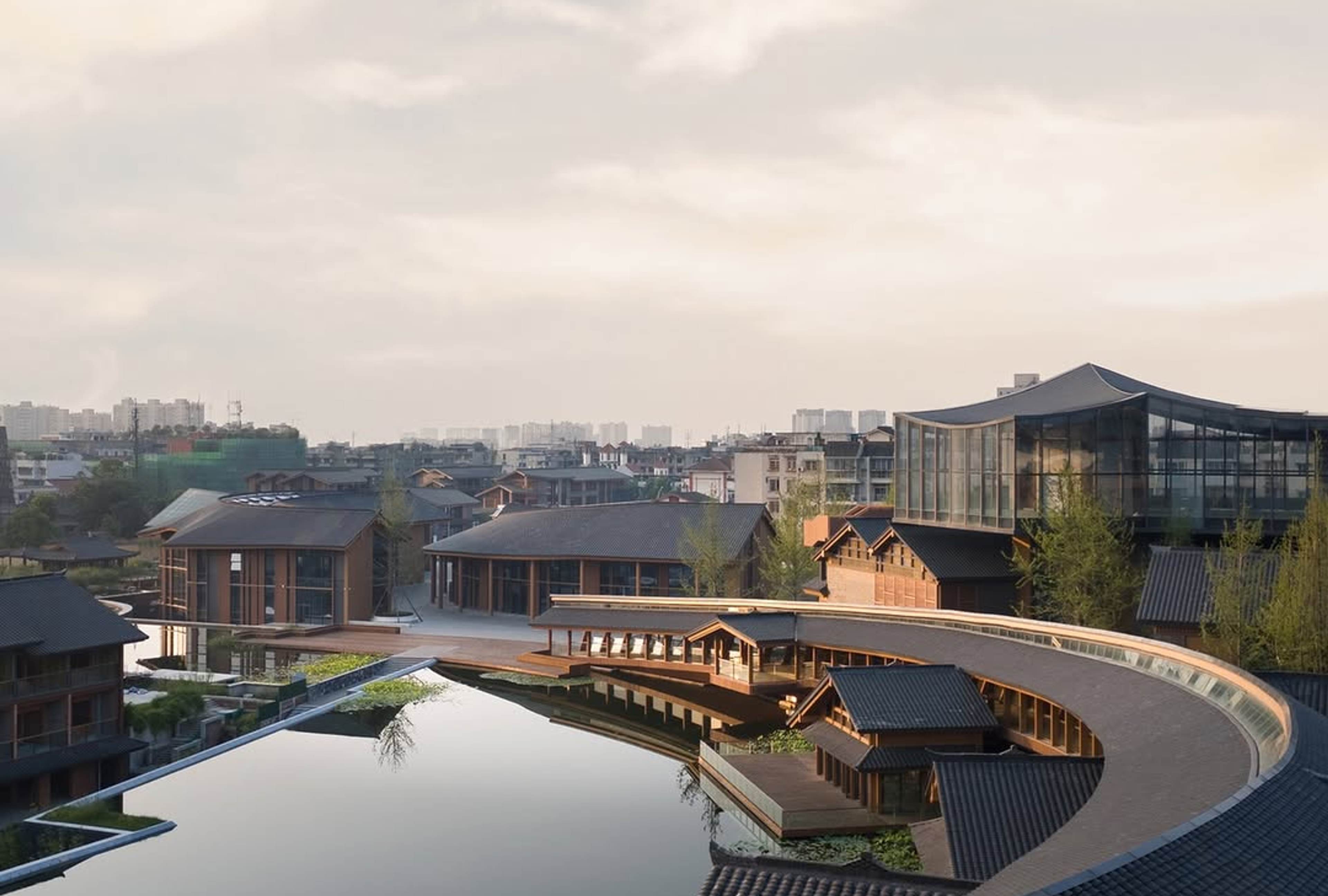
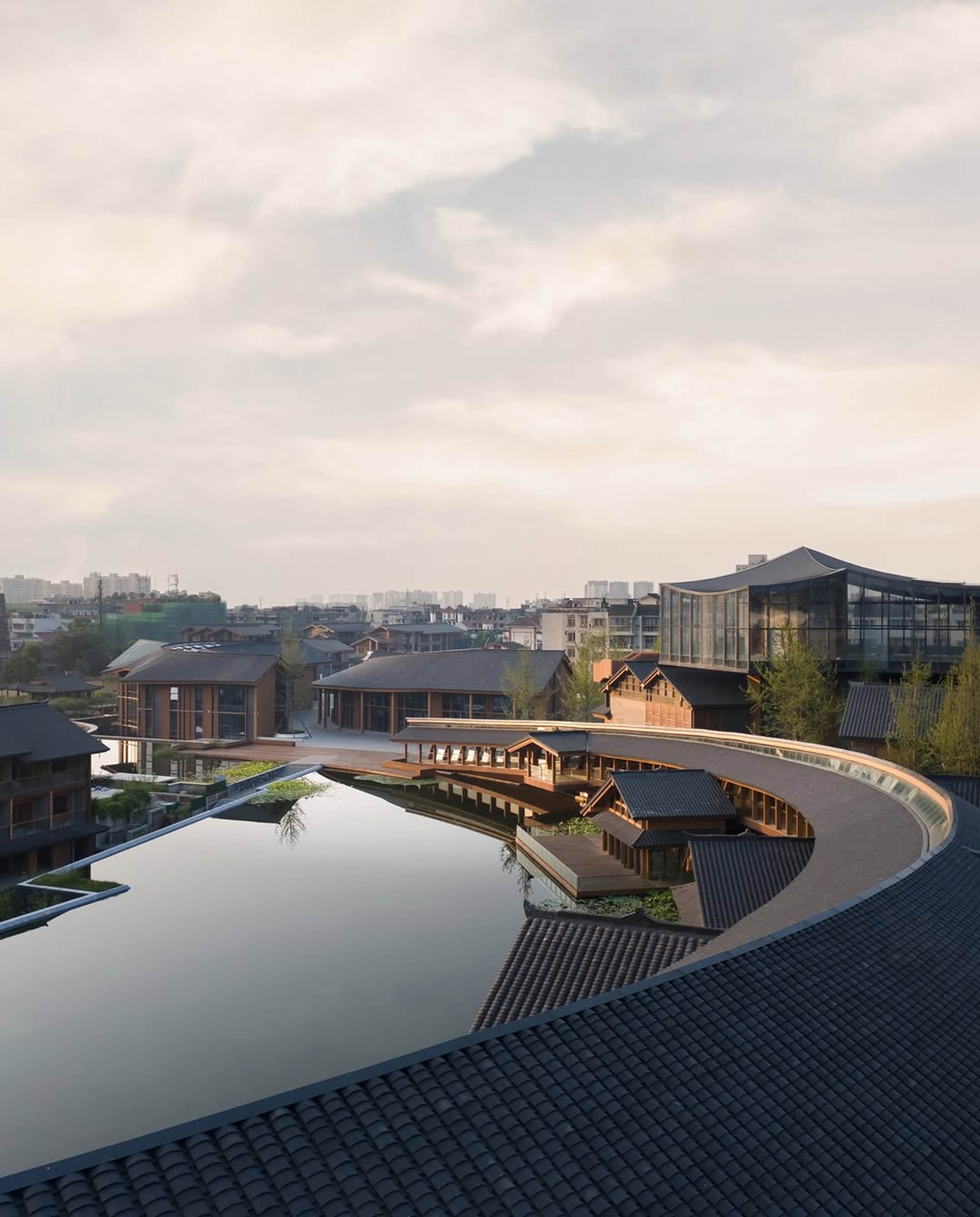
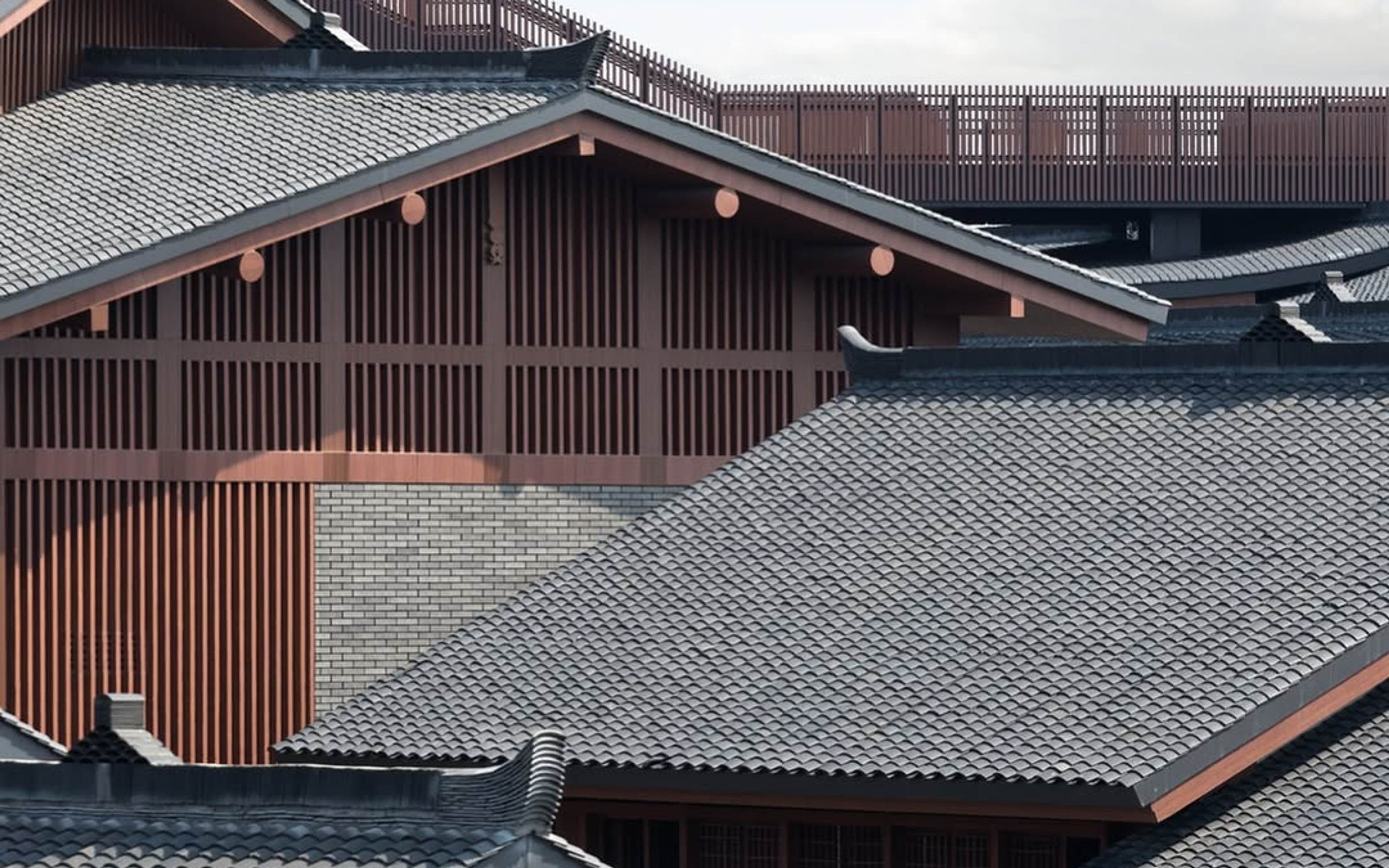
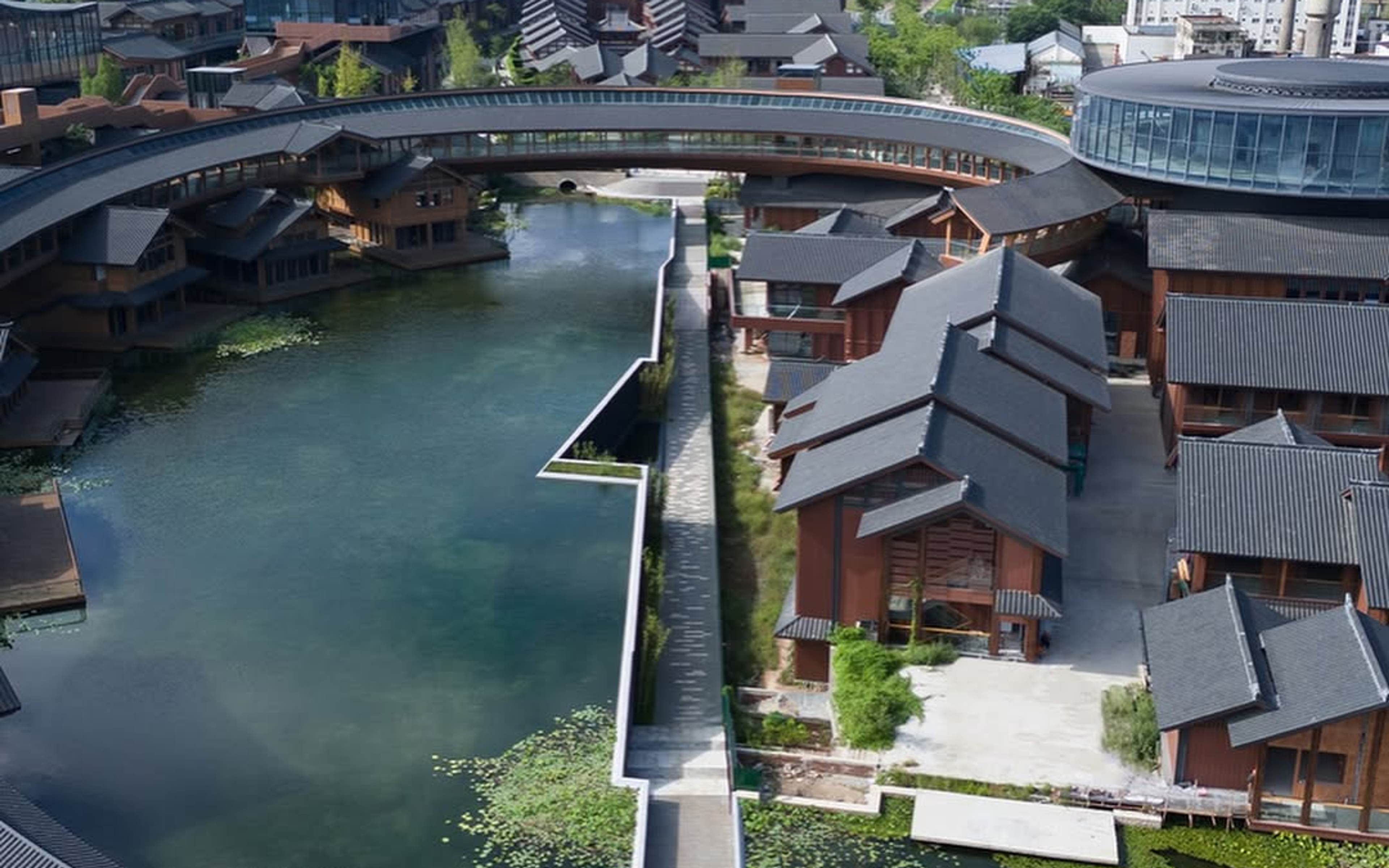
The most immediate decision was also the most loaded one. BIAD-ASA chose to reintroduce traditional Sichuan pitched rooflines across the entire intervention — not as pastiche, but as a calibrated act of urban repair. Seen from above, the effect is extraordinary: a sea of dark grey ceramic tile, each roof articulated at a slightly different pitch and angle, rippling outward from the pagoda like a stone dropped in still water. The old tower no longer reads as an anomaly in a generic cityscape. It reads as the source.
The roofscape is not uniform. Some volumes carry the low, wide eaves of traditional civic buildings; others step and stack in the manner of vernacular merchant houses. A sinuous tiled bridge arcs across the central water body, its curved canopy covered in the same grey tile, connecting the two halves of the scheme in a gesture that belongs equally to Song dynasty engineering and to the contemporary city around it.
To treat the roof as decoration is to misunderstand it — here, it is the primary instrument of urban memory.
Water, Movement, and the Ground Between
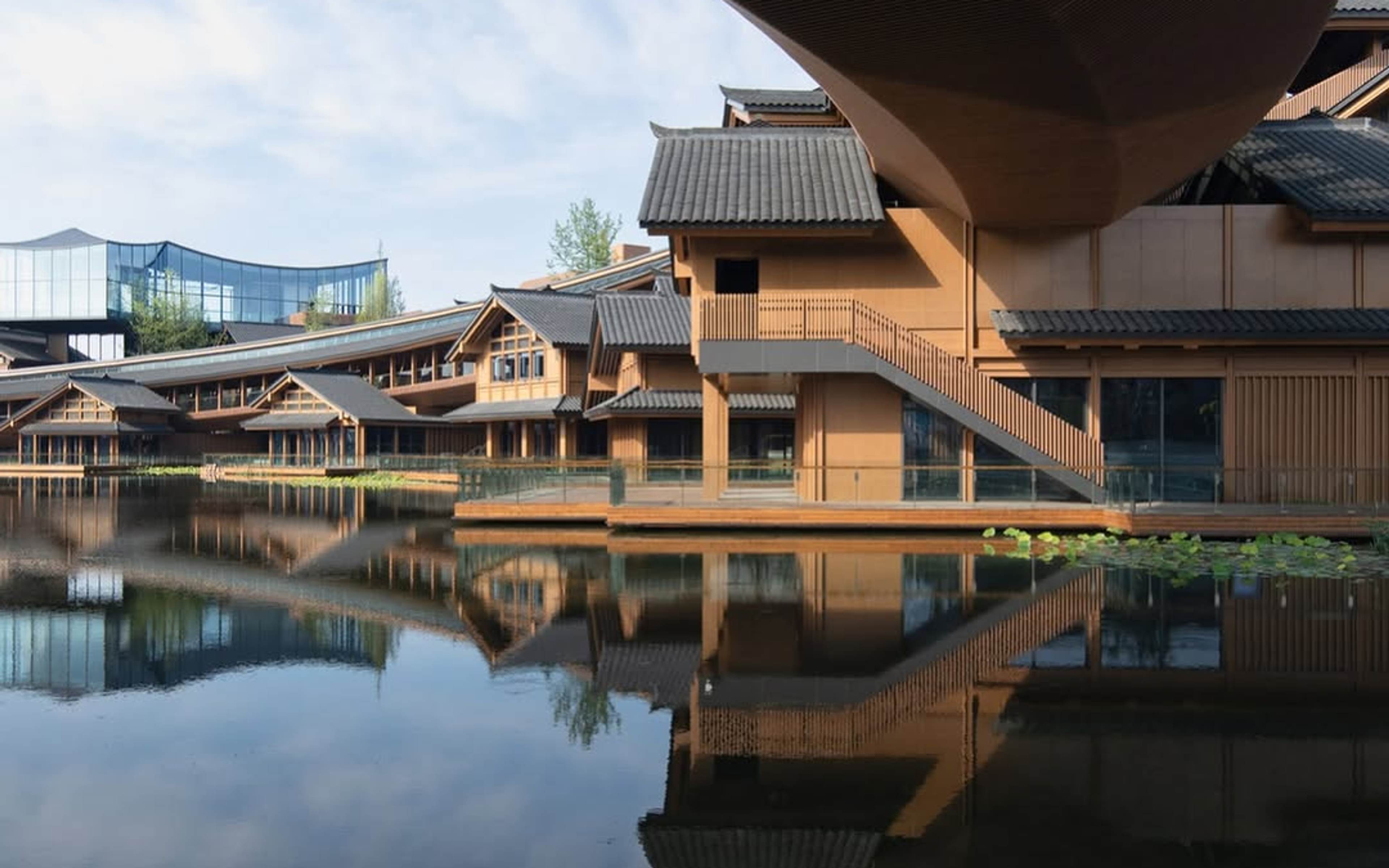
At ground level, the project operates through a network of pedestrian corridors, stone-paved lanes, and waterways that restore the spatial logic of the old town's historic routes. Water is everywhere and purposeful: lotus-filled ponds surround clusters of timber-framed buildings that rise on platforms just above the surface, their warm reddish-brown columns reflected in the still water below. The effect is less resort than contemplative precinct — somewhere between a Southern Chinese water town and a Sichuan temple complex.
Multi-level walkways allow movement through and above the roofscape, offering shifting relationships between the intimate lane and the panoramic view. A large glazed volume at the northern end of the site accommodates programmatic density without dominating: its curved glass curtain wall reads as a contemporary reinterpretation of the swaying eave, deferential in scale to what surrounds it.
Why Pengzhou Matters
China has no shortage of heritage reconstruction projects. Many of them replace authentic decay with pristine simulacra — historic forms emptied of their logic, built fast and priced for tourism. Longxing is a more careful proposition. The architecture does not pretend the twentieth century did not happen; it acknowledges the rupture and works, incrementally, to stitch something coherent back together. The pagoda was never moved, never rebuilt, never themed around. The new city was made to deserve it.
In a moment when questions of cultural continuity are urgent everywhere — not only in China — a project that asks how contemporary architecture can serve existing memory rather than replace it deserves serious attention. BIAD-ASA's answer is patient, material, and rooted in the specific grain of a specific place.
At dusk, the pagoda's gilded finial catches the last light above a city of grey roofs and still water. It is precisely where it has always been. Everything else has been remade to honor that fact.