The Thatch Returns
The Spreewald is a landscape that operates at its own pace. A biosphere reserve threaded with slow-moving waterways southeast of Berlin, it belongs to a Germany most city-dwellers rarely see. It is also a region with a vernacular architecture rooted in steeply pitched thatched roofs — buildings designed not for photogenic appeal but for survival in a wet, wooded environment. When Berlin-based practice MAFEU was commissioned to design a small weekend house here, they didn't treat that tradition as a constraint. They treated it as a starting point.
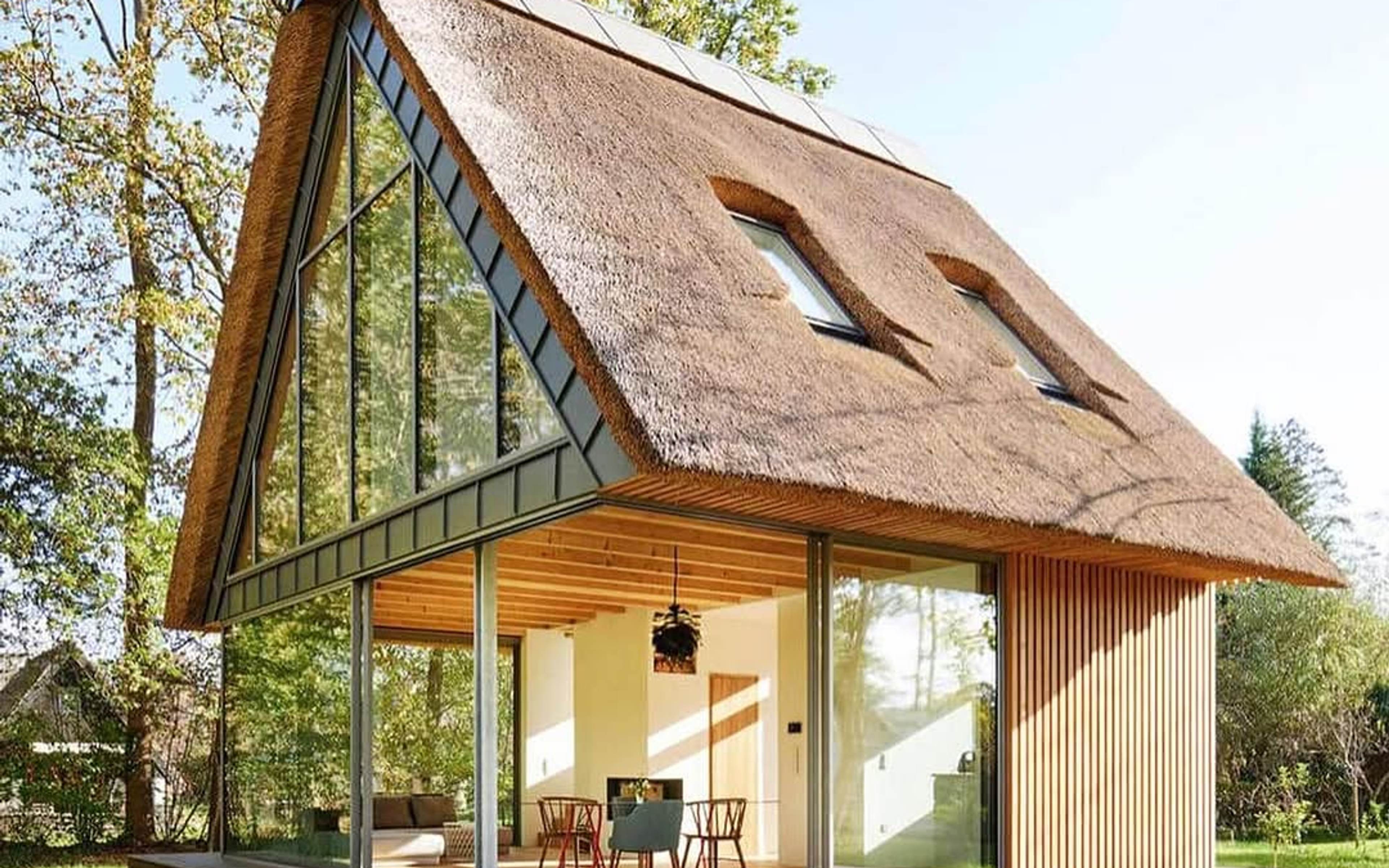
The result is a 70-square-metre retreat that reads, from a distance, as something ancient. Up close, it is anything but.
Glass and Straw
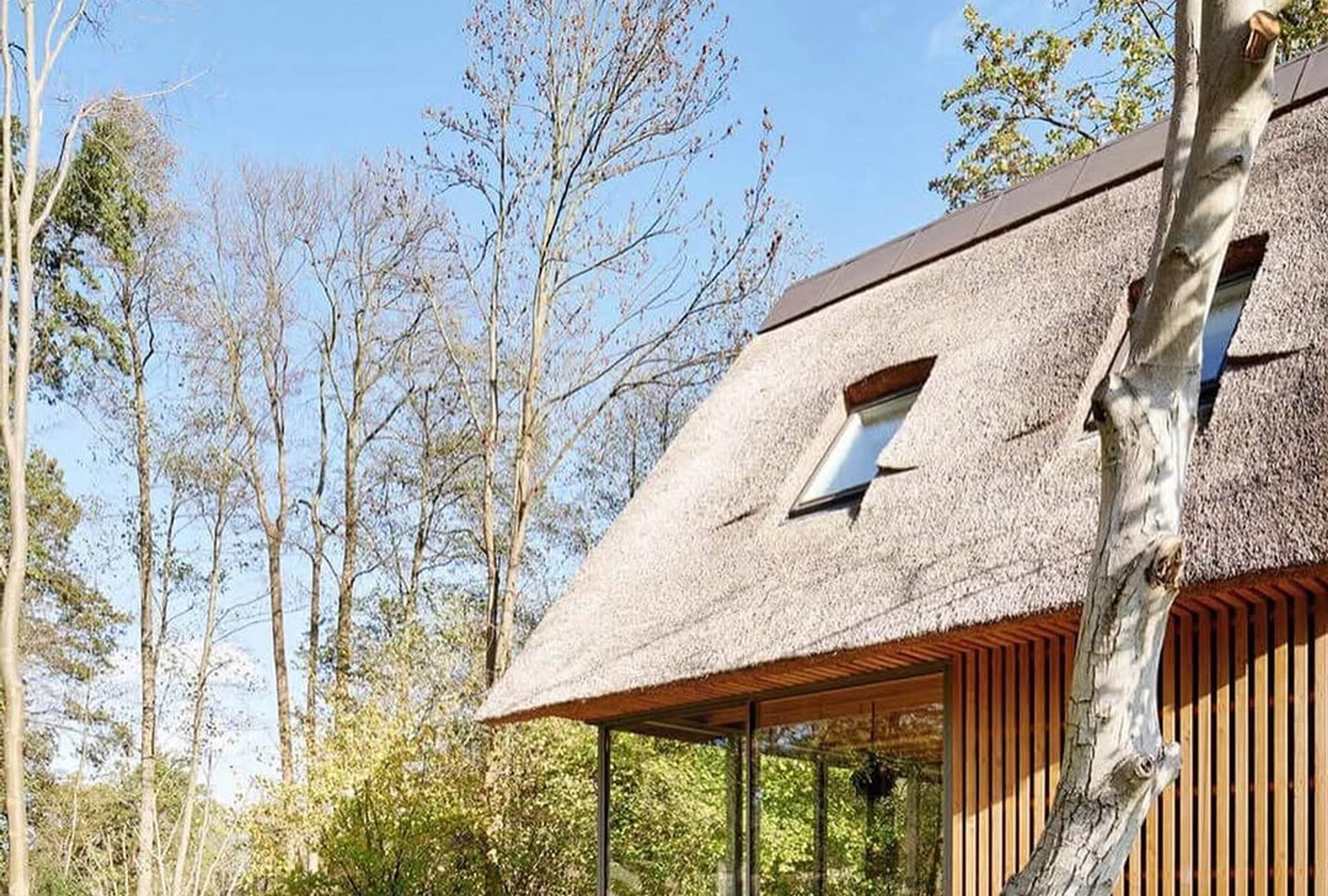
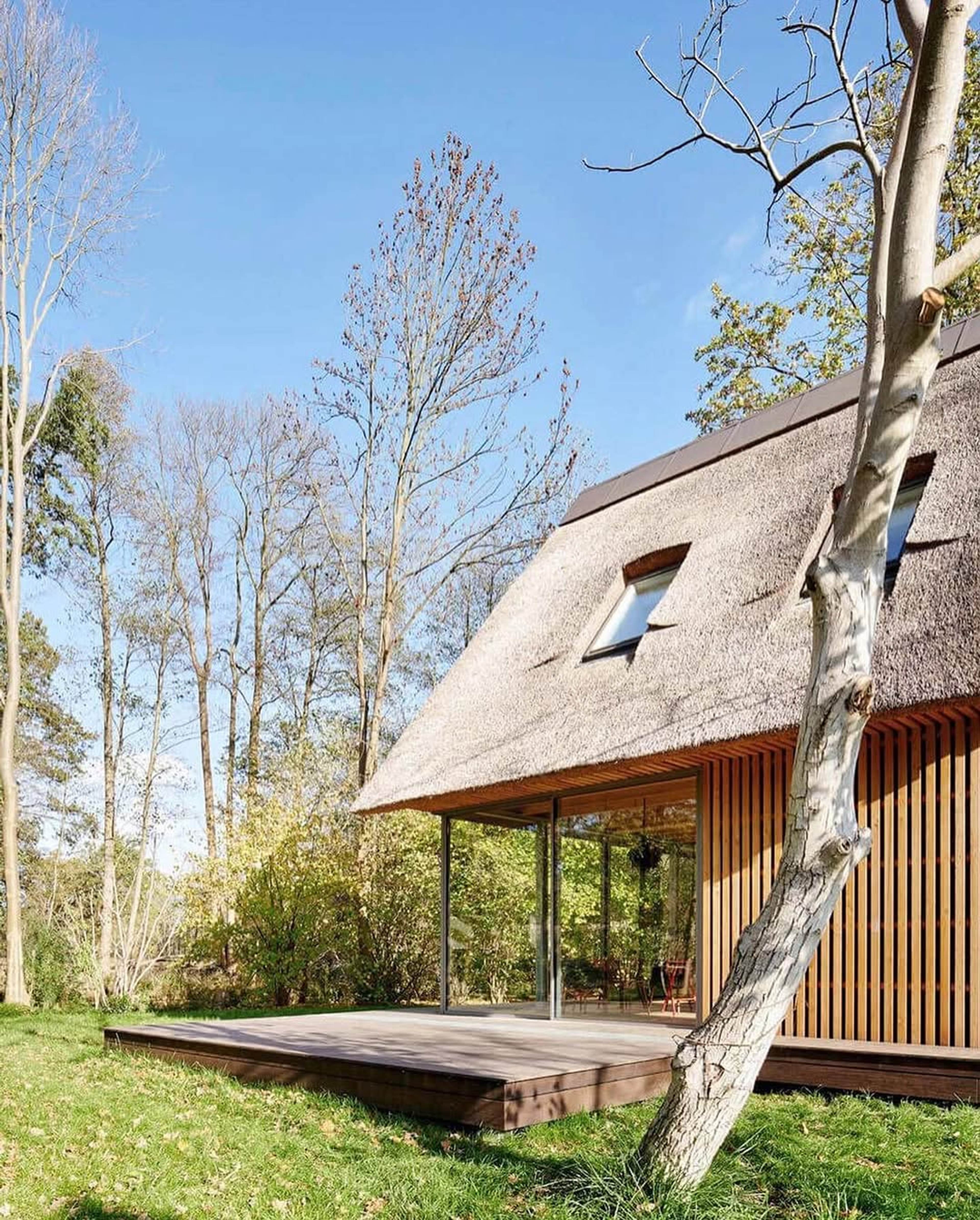
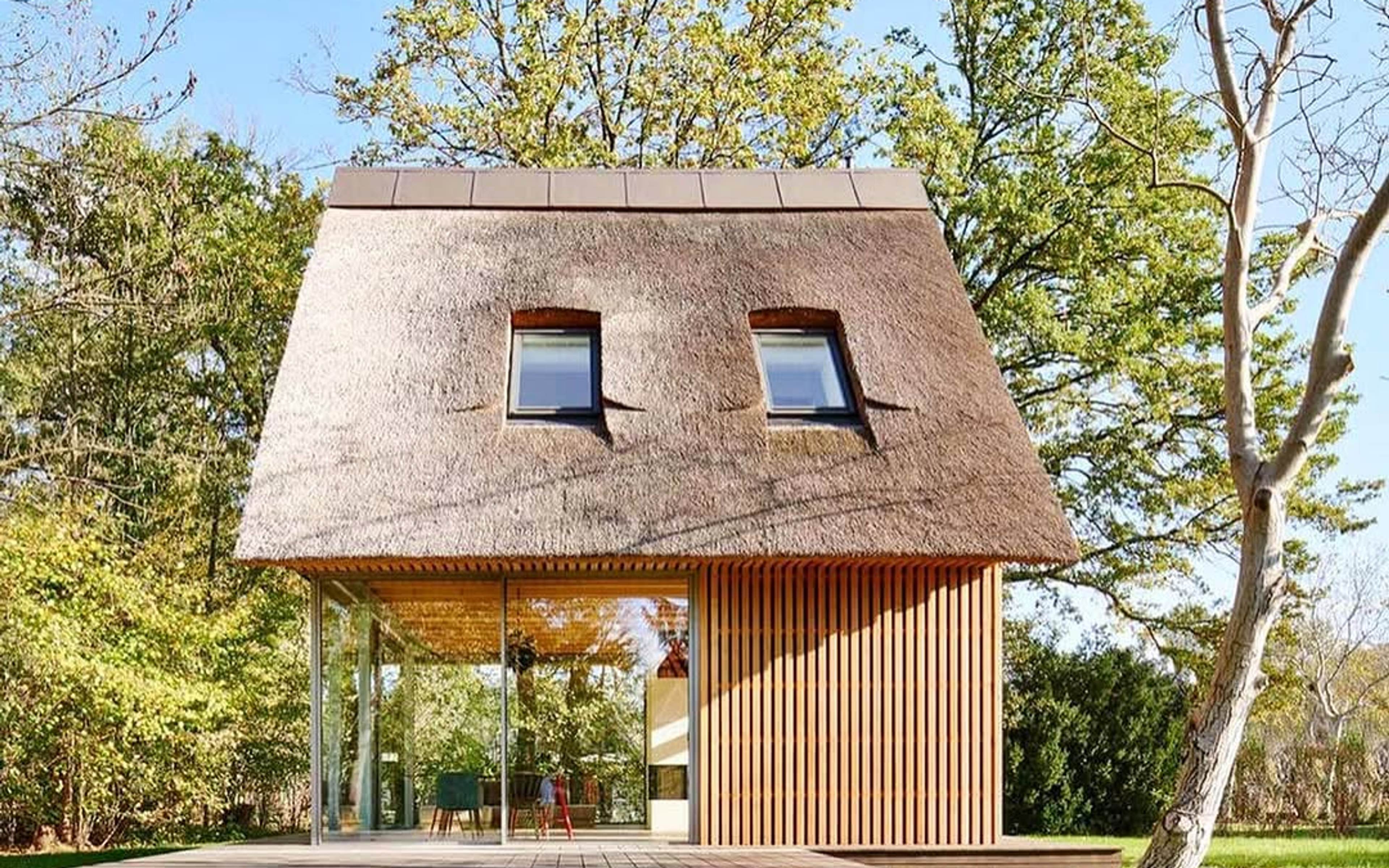
The structural logic is clean: a sharp A-frame thatched roof drops low over the building's footprint, anchoring it visually to the ground and to its wooded surroundings. What makes the scheme surprising is what happens beneath that canopy. On both the garden-facing and forest-facing elevations, full-height cero sliding glazing opens the interior completely to the landscape. The thatch meets the steel frame of the window system at a precise diagonal, the rough texture of the reed pressed directly against thin dark profiles. These are materials that should not agree with each other. Here, they do.
The thatched soffit extends slightly beyond the wall plane on the front elevation, creating a sheltered overhang above the timber deck — dark-stained hardwood planks that form a low plinth between house and lawn. On the side facade, vertical larch battens close the volume where glass cannot. The contrast between the reed, the larch, and the steel is not decorative. It is structural reasoning made visible.
The best details in contemporary architecture don't hide their decisions — they make them legible.
Life at the Edge of the Forest
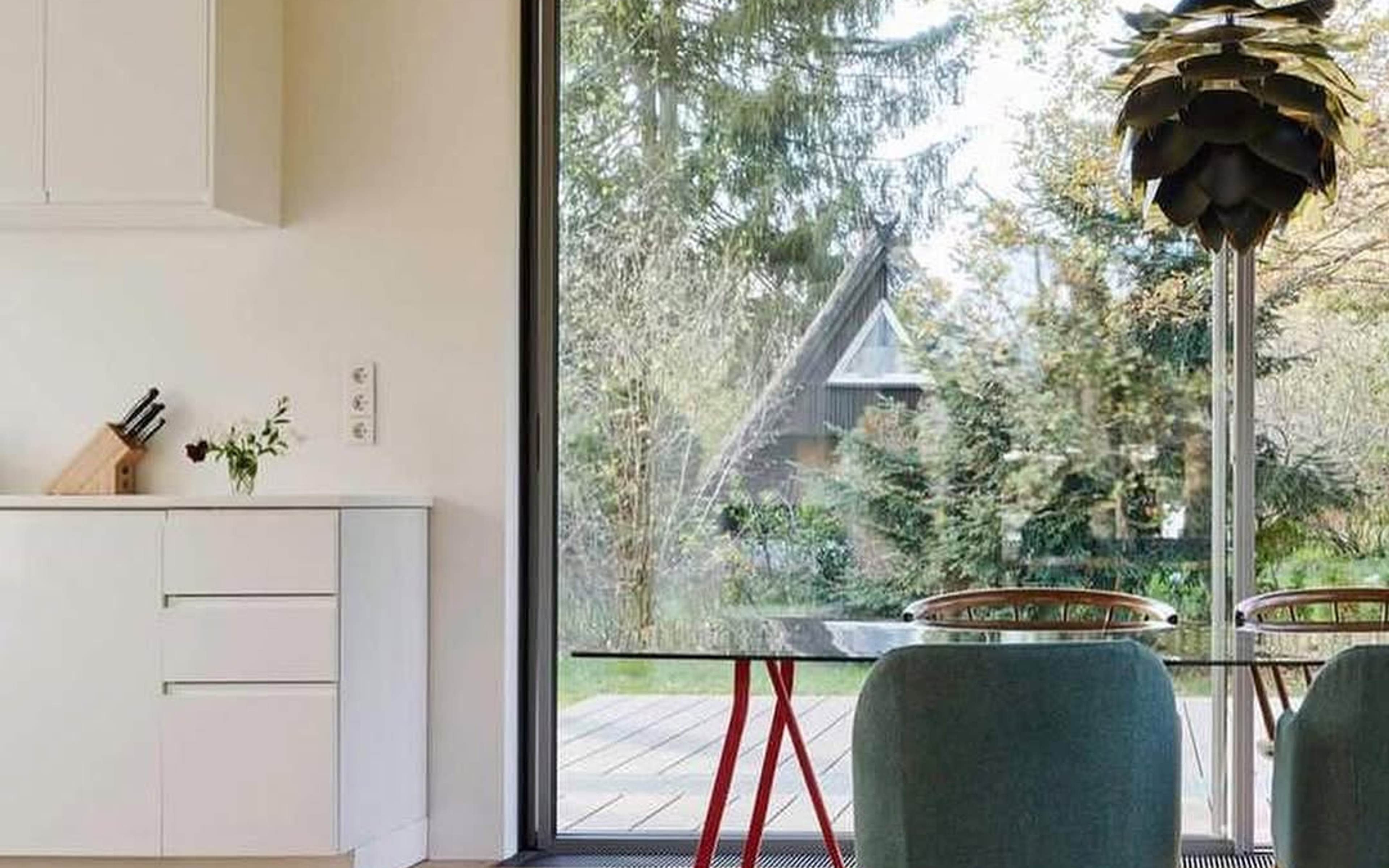
Inside, the palette is restrained enough to let the forest do the work. Pale oak laid in a wide herringbone pattern runs across the ground floor, warm underfoot and low in visual weight. Exposed timber beams cross the ceiling, left raw against white plaster. The furniture is deliberately characterful: a glass-top dining table on signal-red steel trestle legs, walnut spindle-back chairs, a brass artichoke pendant that catches the afternoon light. Nothing here is precious, but nothing is careless either.
The upper sleeping area captures the roofline's geometry most directly. A triangular glass gable fills one end of the bedroom, framing a view across the waterway and into the birch forest beyond. Waking up to that is not incidental to the architecture. It is the architecture.
Why It Matters
There is a growing fatigue with the idea that contemporary means glass-box, that modernity requires erasing what came before. MAFEU's Spreewald cabin does not resolve that tension so much as dissolve it. The thatched roof is not a quotation — it is load-bearing, thermally performing, genuinely of this place. The glass is not a provocation — it is a considered answer to the question of what a house in a protected forest owes its surroundings.
In a moment when architecture is rightly asked to account for its materials, choosing reed over tile, timber over render, sliding glass over a sealed envelope feels less like aesthetic preference and more like a position.
On the forest side, a single walnut chair sits against the floor-to-ceiling glass. A white cup on a saucer rests beside it on the pale oak floor. It is the quietest possible image of a house doing exactly what it was built to do.