There are fairs where you photograph everything and remember nothing. PAD Paris is not that fair. Held for the 28th time in the Jardin des Tuileries, the 2026 edition reminded you, stand by stand, that some objects only reveal themselves in proximity. You had to get close. You had to look twice.
The fair has always occupied a particular position in the European design calendar: equal parts gallery and marketplace, serious about craft without taking itself too seriously. This year's standouts were not the loudest pieces but the ones that held their ground under scrutiny.
Light as Material
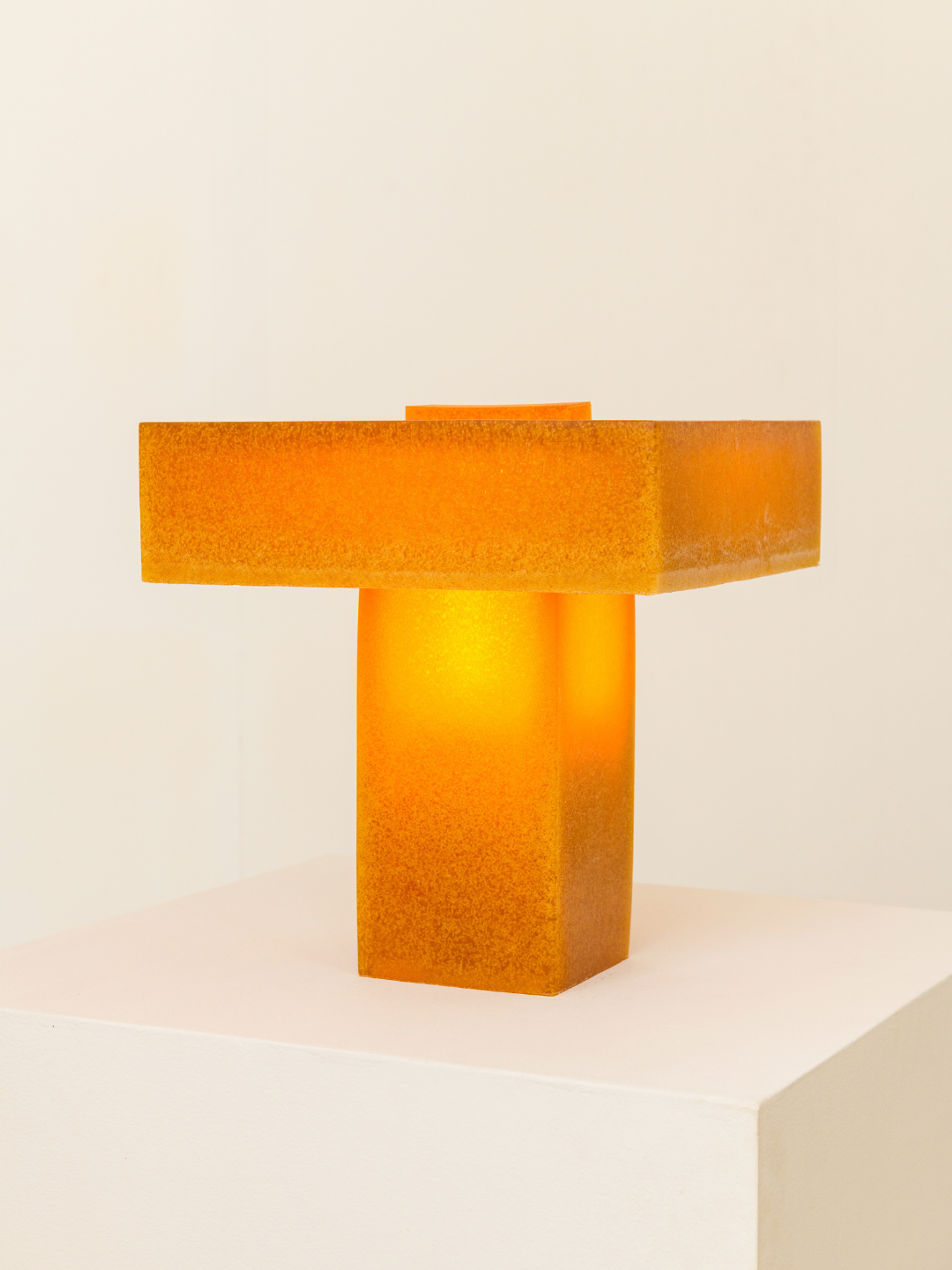
Few objects stopped foot traffic like the Ricino C table lamp by Estudio Rain. Cast in amber-orange resin with a frosted, granular surface, the lamp reads from a distance as something geological. When lit, the rectangular stem glows from within and the wide cantilevered shade becomes a lantern, light diffusing through what looks like solidified amber. The form is almost brutally simple: a T-shape, architecturally confident. The resin does the rest.
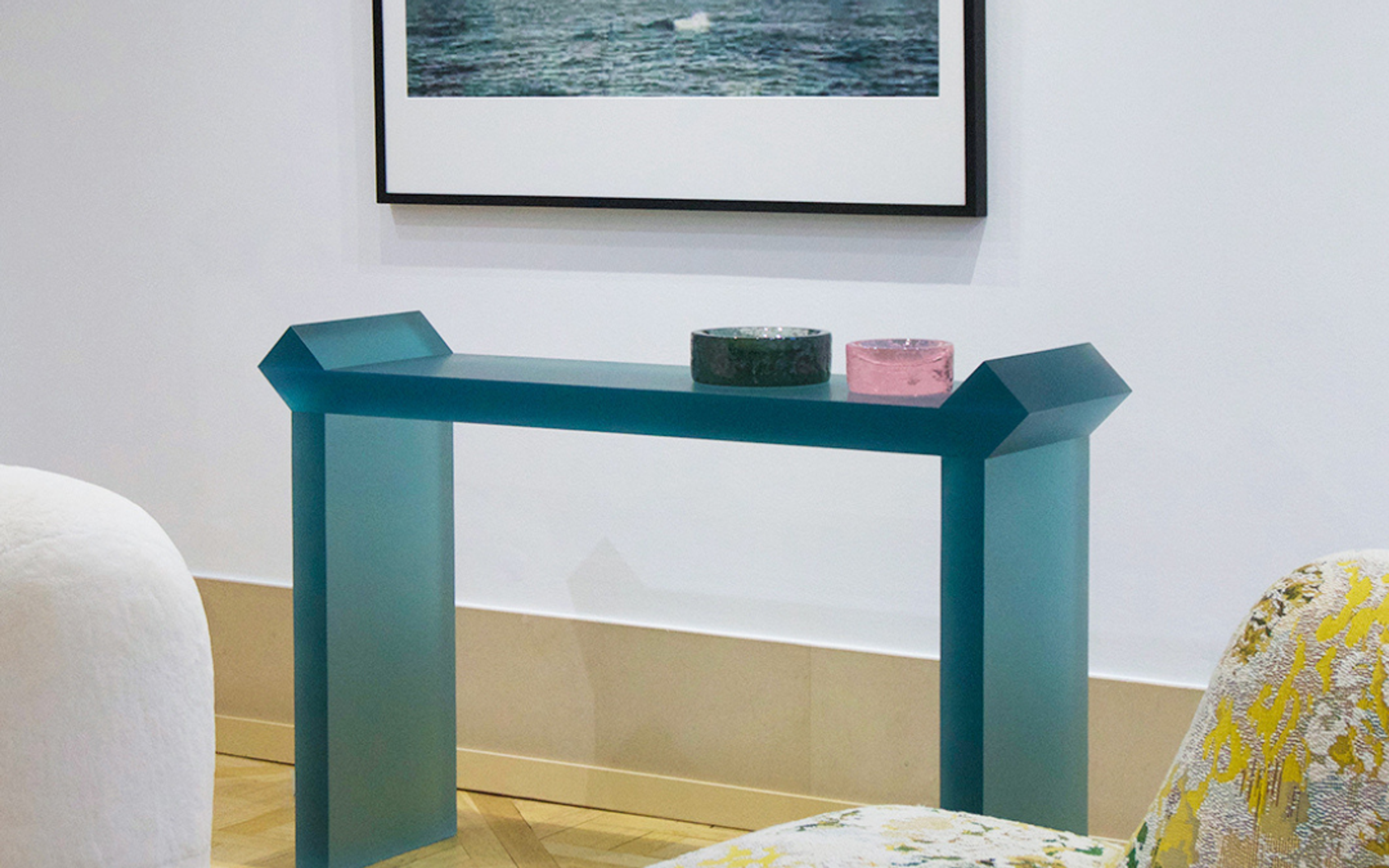
A few stands away, Francesco Balzano's Constantin Console at Theoreme operated in a cooler register. In translucent teal resin, matte and dense, it reads as both bench and altar. The deliberate angularity where legs meet tabletop gives it a presence most steel or wood consoles cannot match. Placed beneath a framed seascape on herringbone parquet, it looked entirely at home and entirely unlike anything else in the room.
Resin, long treated as a substitute material, arrived at PAD 2026 as the real thing.
Metal in Motion
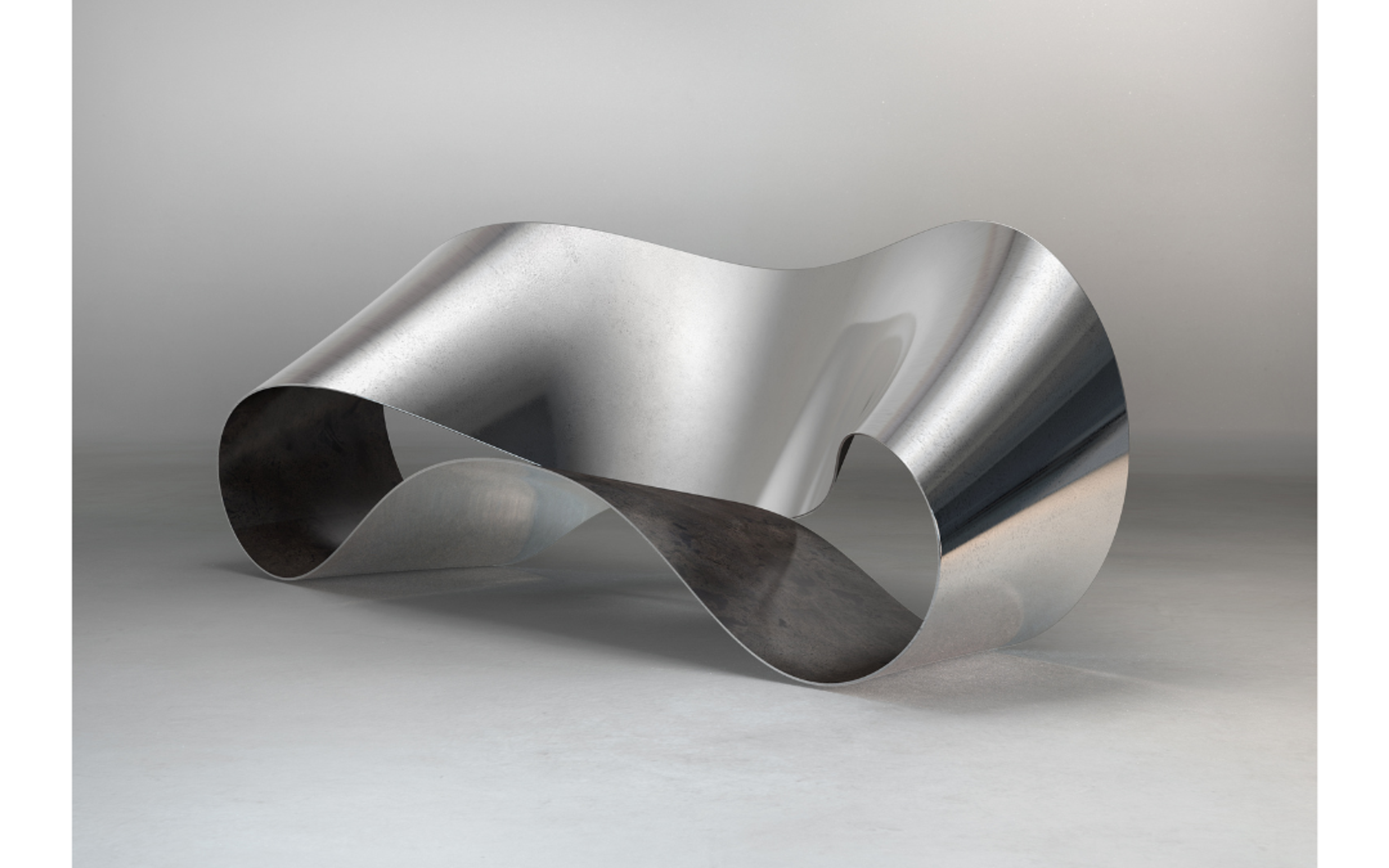
Ron Arad's Coil Sofa, presented by Opera Gallery, belongs to a different conversation. A single sheet of stainless steel, mirror-polished on its underside and matte on top, rolled and folded into a seating form. It is furniture that reads as a drawing, a continuous line that loops back on itself and somehow becomes a place to sit. A companion piece nearby, a looser coil not yet resolved into table or bench, illustrated what Arad has always understood: the most interesting objects are those caught in the act of becoming something else.
Ritual and Ceremony
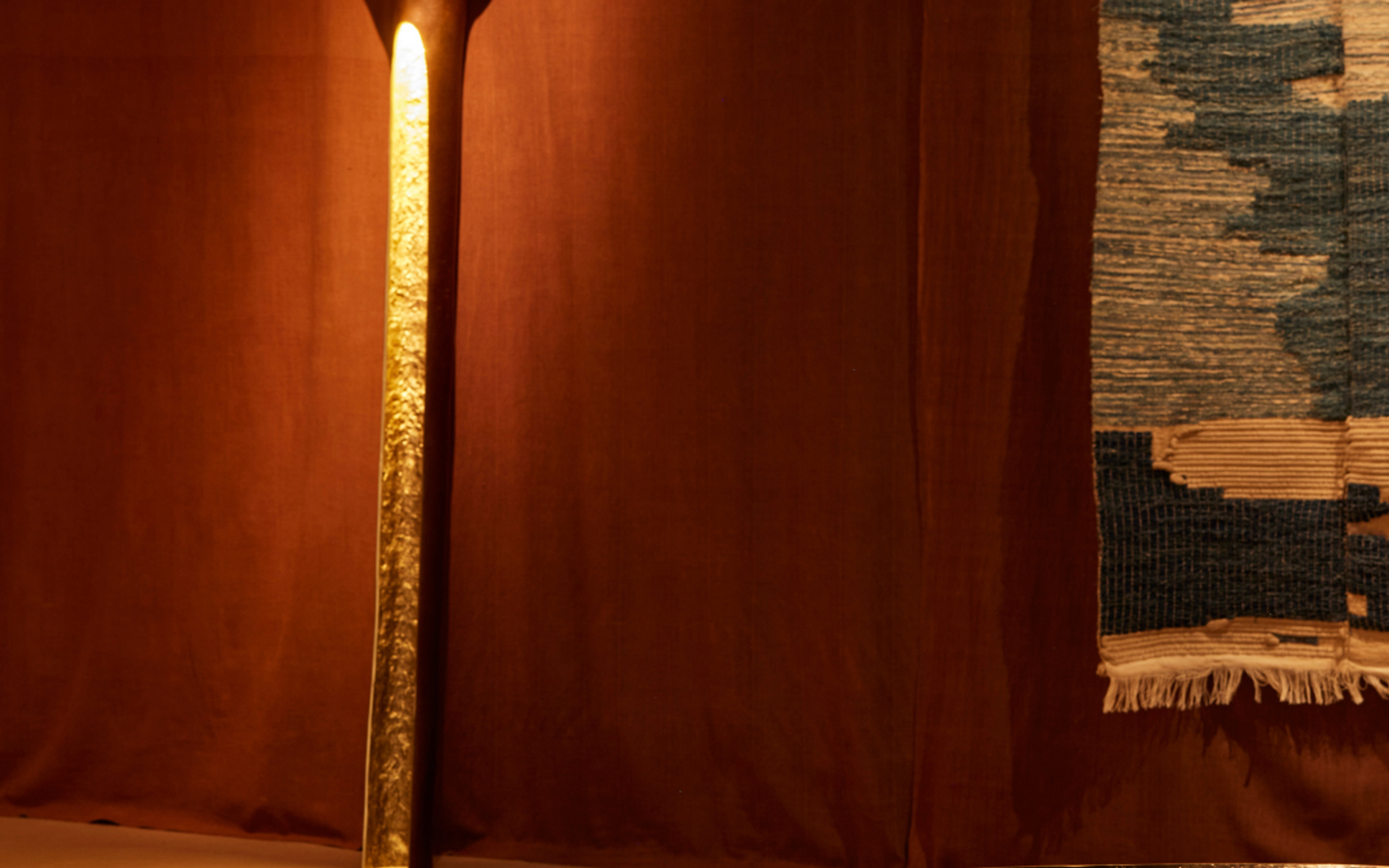
Maison Integre's installation was the fair's most atmospheric ensemble. A hand-woven tapestry by Bogoke Collectif and Rachel Marsil hung against deep ochre linen, its surface shifting between sandy beige and slate blue in patterns that suggested erosion or tide. Below it, a broad low bronze table on stubby conical legs sat surrounded by small cast pieces by Lucile, Y. Pronier, and Ohtonio: stools, animal-like forms, abstract vessels. Forked bronze floor lamps threw long shadows across the scene. It felt less like a display and more like a ceremony.
The Collector's Room
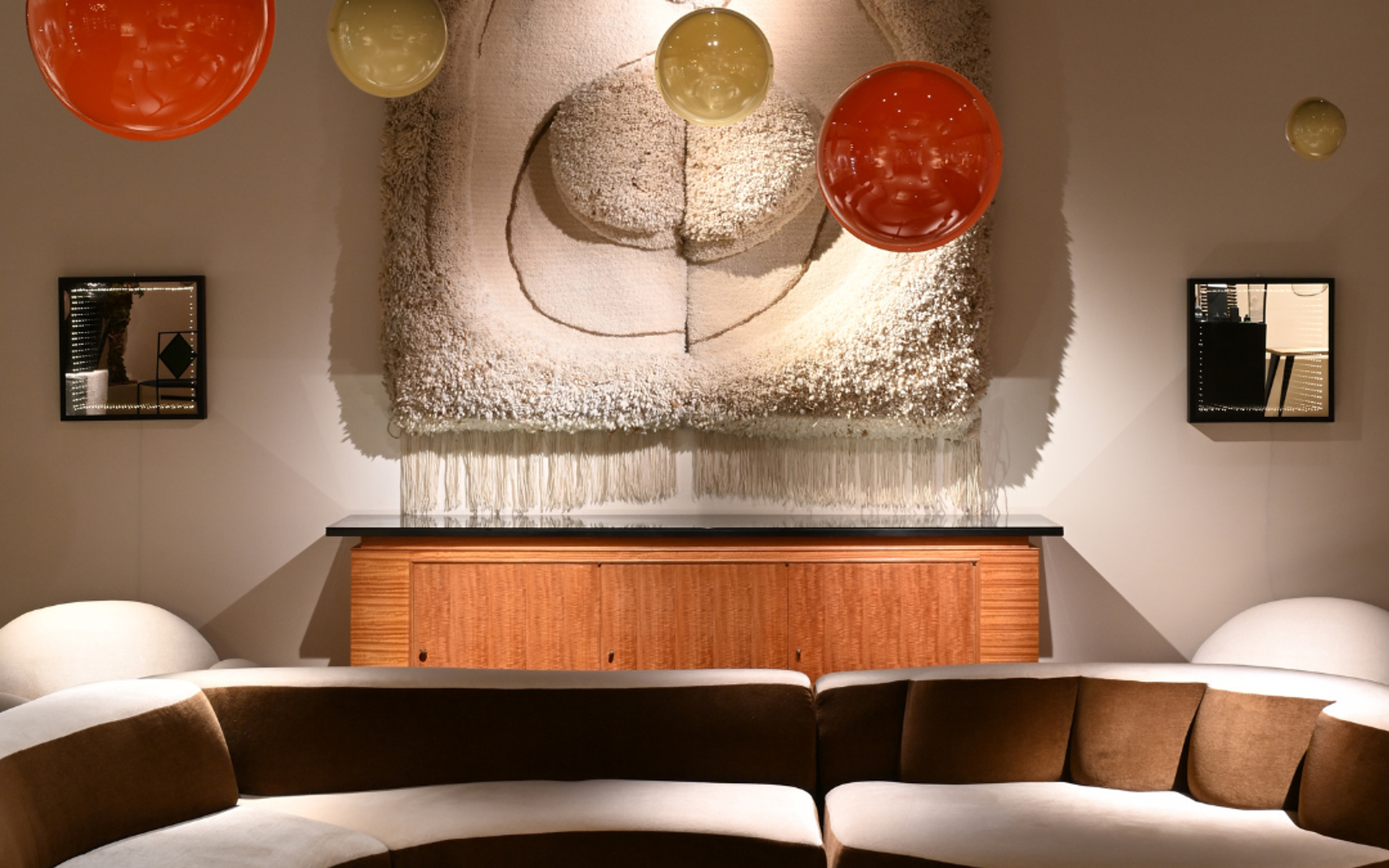
The stand curated by Julien Spitzer compressed several decades into one room. A curved velvet sectional in chocolate brown, a biomorphic fiber-art wall piece, blown-glass spheres in orange and olive drifting overhead, a mosaic-inlaid oak coffee table below. The effect was cinematic: a living room from a film not yet made.
PAD has always asked whether design can be both serious and seductive. The 2026 edition answered clearly, and with specificity. Resin, stainless steel, hand-spun wool, sand-cast bronze: each material demanded a process that resisted shortcuts. In a moment when surfaces are increasingly easy to simulate, that resistance feels significant.
The Ricino C was still glowing as the halls thinned out on the final afternoon. Up close, its surface looked almost biological, like amber with something caught inside. That is probably the point.